
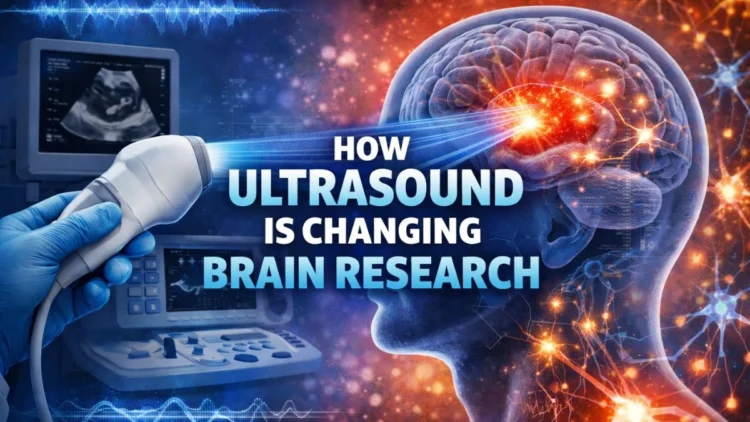
Ultrasound, long known for prenatal imaging, is now emerging as a powerful tool in advanced medical research. Scientists are developing innovative techniques that use focused sound waves to control genes, influence brain activity, and deliver drugs with remarkable precision—all without invasive surgery.
This evolving field, often called sonogenetics, is opening new possibilities in neuroscience and treatment development.
From Light to Sound: A Scientific Breakthrough
For years, researchers relied on optogenetics, a method that uses light to control cells through light-sensitive proteins. While effective, it has a key limitation—light cannot penetrate deep into body tissues without surgical intervention.
Ultrasound, by contrast, can travel deep into tissues and be focused with near laser-like precision. At targeted points, it can gently heat or vibrate cells, enabling scientists to activate or modify biological processes in ways that were previously difficult or impossible.
How Ultrasound Controls Cells and Genes
Researchers are developing different mechanisms to control cellular behavior using ultrasound:
- Thermal activation: Slight heating triggers temperature-sensitive genetic switches.
- Mechanical stimulation: Vibrations activate molecular pathways inside cells.
- Microbubble interaction: Ultrasound causes tiny bubbles to expand and contract, loosening barriers and allowing molecules to pass.
Some engineered proteins can amplify gene activity dramatically—even up to 300 times with minimal temperature changes, offering precise biological control.
Breaking Through the Blood-Brain Barrier
One of the most significant breakthroughs is ultrasound’s ability to temporarily open the blood-brain barrier, a protective shield that normally blocks large molecules from entering the brain.
By using microbubbles and focused sound waves, scientists can safely create openings that allow drugs or gene-carrying viruses to reach specific brain regions. This technique has already been used in research to modify neuron activity and even influence memory formation in animal studies.
Targeted Drug Delivery in the Brain
Another promising application involves delivering drugs precisely where needed. For example, researchers can attach medications like anesthetics to microscopic droplets in the bloodstream. When ultrasound is applied, the drug is released only at the targeted brain location.
This approach could help doctors test the effects of treatments before performing brain surgery, reducing risks and improving outcomes.
Conclusion
Ultrasound is rapidly evolving from a diagnostic tool into a transformative technology for controlling biological systems. Its ability to reach deep tissues noninvasively makes it a powerful alternative to traditional methods like optogenetics. Although many applications are still in early experimental stages, the future potential is significant—offering safer, more precise treatments and groundbreaking insights into brain function.