
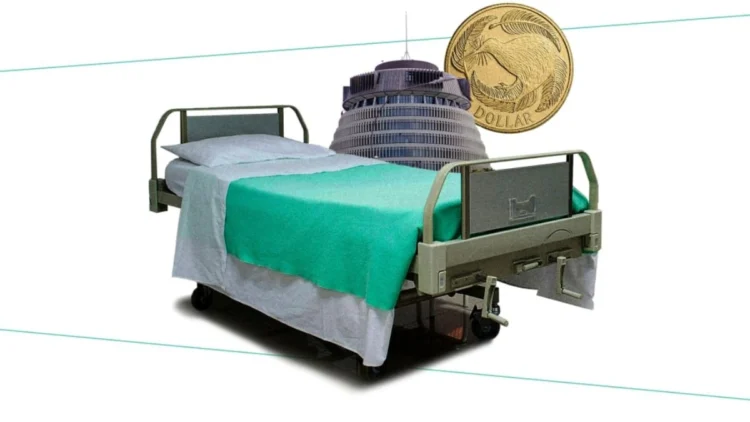
Internal documents have revealed that Health New Zealand (Health NZ) is facing an “extreme risk” due to insufficient workforce capacity as it attempts to implement the government’s rapid decentralisation plan. The findings raise concerns about whether the system is adequately prepared to shift decision-making power to regional and district levels.
Government’s Push for Rapid Devolution
In November, Health Minister Simeon Brown instructed Health NZ to quickly transfer decision-making authority to its four regions and 20 districts. The goal was to improve healthcare delivery by bringing decisions closer to local communities, hospitals, and patients.
From July, the new structure will:
- Allow regions and districts to manage workforce, budgets, and service delivery
- Enable hospitals to recruit and allocate staff without central approval
- Retain national oversight for strategy, standards, and system-wide planning
Brown emphasized that this move is not a return to the previous District Health Board (DHB) model but rather a more responsive and locally driven system.
Workforce Capability Identified as ‘Extreme Risk’
A report presented to a newly formed devolution committee highlighted serious workforce challenges. According to the assessment:
- Workforce capability received the lowest rating across all regions
- Critical staffing shortages exist in multiple operational areas
- Key gaps include infrastructure, procurement, health and safety, planning, finance, and data analysis
The report clearly stated that “people capability is an extreme risk,” signaling major concerns about the system’s readiness for decentralisation.
Concerns Over Speed of Implementation
While the government has pushed for rapid reform, the report indicated that many stakeholders believe foundational systems should be strengthened first.
It warned that:
- Moving too quickly could weaken financial oversight
- Existing controls may be undermined during transition
- Risks could increase without proper preparation
This suggests that accelerating the process without adequate groundwork may create instability in the healthcare system.
Impact of Previous Centralisation Reforms
The report also pointed to the consequences of earlier centralisation efforts introduced in 2022. These reforms led to job cuts and voluntary redundancies, resulting in a loss of institutional knowledge.
Key findings include:
- Reduced experience in operational and strategic decision-making at district levels
- Significant leadership gaps, with most senior roles currently filled on an interim basis
- Limited local capacity due to previous restructuring
This has made it more challenging for regions and districts to take on increased responsibilities.
Financial and Operational Challenges
The assessment identified weaknesses in financial management and operational readiness:
- Local teams lack sufficient expertise in budgeting and financial planning
- Staff turnover and lack of robust costing systems have created knowledge gaps
- Nine out of 12 key operational categories were rated below full effectiveness
In particular, areas like internal auditing and savings programs were found to be only partially effective.
Technology and Infrastructure Limitations
Another critical issue highlighted in the report is the reliance on technology that is not yet fully implemented. Planned changes depend on systems such as artificial intelligence, but current operations still rely on manual processes and temporary workarounds.
This gap further complicates the transition to a decentralised model.
Government Response and Reform Justification
Health NZ has acknowledged the workforce and capability gaps and stated it is working to address them. Officials emphasized the need to carefully manage the transition to ensure districts are fully prepared.
The government maintains that decentralisation is necessary to:
- Improve responsiveness to patient needs
- Increase local accountability
- Enhance clinical input in decision-making
A spokesperson noted that the system inherited from previous reforms required stabilisation and could not simply be reversed overnight.
Expert and Union Reactions
The Association of Salaried Medical Specialists (ASMS) supports decentralisation in principle but has raised concerns about insufficient resources.
Executive director Sarah Dalton warned that:
- Districts may be given more responsibility without adequate support
- The system risks becoming overwhelmed if expectations are unrealistic
Health commentator Ian Powell also stressed that successful devolution requires strong capabilities, which have been weakened by past restructuring. He highlighted job insecurity among management as a factor contributing to organisational instability.
Risks and Uncertainties in the Transition
The Deloitte report outlined several potential risks associated with rapid decentralisation, including:
- Reduced control and inconsistent decision-making
- Duplication of efforts across regions
- Gaps in accountability and reporting
- Lack of a clearly defined end-state structure
It emphasized the importance of careful planning, noting that the scope, pace, and sequence of reforms remain unclear.
Conclusion
The push to decentralise Health New Zealand’s system aims to improve healthcare delivery by empowering local decision-making. However, internal reports highlight significant risks, particularly related to workforce shortages, financial capability, and operational readiness. While the reform has potential benefits, experts and stakeholders caution that moving too quickly without proper resources and planning could destabilise the system. A balanced, well-prepared approach will be essential to ensure the success of this major transformation.
FAQs
What is the main concern about Health NZ decentralisation?
The biggest concern is a lack of workforce capacity, which has been identified as an “extreme risk” in internal reports.
What changes will decentralisation bring?
Regions and districts will gain control over staffing, budgets, and service delivery, while national oversight remains for strategy and standards.
Why are experts worried about the reform?
Experts believe the system lacks the necessary resources and preparation, which could lead to inefficiencies and weakened oversight.