


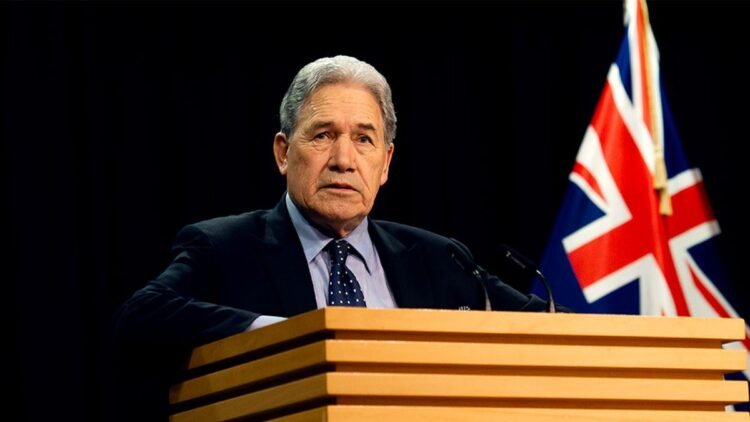
During his State of the Nation address, New Zealand First leader Winston Peters outlined a bold proposal to restructure the country’s energy market. Alongside this announcement, he discussed economic challenges, reflected on Covid-19 management, and shared his party’s goals for the upcoming election.
Peters also used parts of his speech to criticize political opponents, including Labour, the Green Party, and Te Pāti Māori, while acknowledging that New Zealand is currently facing a “chaotic environment” and an underperforming economy.
Plan to Break Up Energy Gentailers
A key highlight of Peters’ speech was his party’s intention to separate energy gentailers—companies that both generate and retail electricity. According to Peters, this move would prevent large firms from controlling both supply and pricing.
He pointed out that the four dominant energy companies currently control nearly 90 percent of electricity generation and effectively sell power to themselves. The proposed reform, he argued, would boost competition, increase renewable energy production, and strengthen the resilience of the electricity system.
Peters emphasized that the goal is to create a fairer and more secure energy market for all New Zealanders. This policy direction aligns with earlier statements from New Zealand First Minister Shane Jones, who also supported reviewing the gentailer model.
Alfred Ngaro Announced as New Candidate
The event also featured the introduction of Alfred Ngaro as a new New Zealand First candidate for the upcoming election. Speaking before Peters, Ngaro expressed confidence in the party’s values and vision.
He highlighted a growing sense of uncertainty among citizens, noting that many people are working hard but remain unsure about their future. Ngaro expressed optimism, stating that New Zealand’s best days still lie ahead.
However, his speech drew some confusion from attendees, as several audience members questioned his identity due to a lack of initial introduction.
Criticism of Fonterra and Air New Zealand Policies
Peters also addressed economic issues involving major national companies. He criticized Fonterra’s plan to sell well-known brands such as Mainland, Anchor, and Kapiti, describing the company’s shift as a move away from its national roots toward global priorities.
In addition, he strongly opposed suggestions that the government should reduce or sell its stake in Air New Zealand. Peters described such proposals as misguided economic thinking, emphasizing that the airline remains a critical national asset that deserves continued government support.
Covid-19 Inquiry and Labour Critique
The New Zealand First leader pointed to findings from the latest Covid-19 inquiry as evidence of shortcomings in Labour’s handling of the pandemic. He called for accountability from former ministers, including Chris Hipkins and Ayesha Verrall.
Peters accused the previous government of mismanaging public funds and failing to adequately inform citizens about vaccine-related risks—claims that Labour has firmly rejected.
Protests and Public Reaction
The speech, held at the Atrium Conference Centre in Otūmoetai, Tauranga, was met with protests outside the venue. Demonstrators displayed Palestinian and Māori flags, while others voiced opposition to Shane Jones’ fisheries reforms.
Some protesters carried signs criticizing the fishing industry, suggesting that recent policy changes favor large commercial interests over everyday New Zealanders. Reports indicated that some demonstrators were linked to Destiny Church.
Poll Performance and Political Standing
New Zealand First appears to be gaining momentum in recent polls. According to the latest RNZ Reid Research survey, the party has reached 9.8 percent support, which could translate into 12 parliamentary seats—an increase from its current representation.
In the preferred prime minister rankings, Peters stands at 12.6 percent, placing him behind Labour leader Chris Hipkins at 21.1 percent and National leader Christopher Luxon at 19.4 percent.
Conclusion
Winston Peters’ State of the Nation speech signals a strong push by New Zealand First to reshape key sectors, particularly energy, while positioning itself as a challenger ahead of the election. With proposals to break up gentailers, criticism of major economic decisions, and calls for accountability over Covid-19 management, the party is aiming to connect with voters concerned about economic stability and national assets. As polling numbers rise, these policy announcements could play a significant role in shaping the political landscape in the months ahead.
FAQs
What is the proposed energy reform by New Zealand First?
The party plans to separate electricity generators and retailers to increase competition and prevent price control by large companies.
Who is Alfred Ngaro?
Alfred Ngaro is a newly announced New Zealand First candidate for the upcoming election.
How is New Zealand First performing in recent polls?
The party is polling at 9.8 percent, potentially securing 12 seats in parliament.