


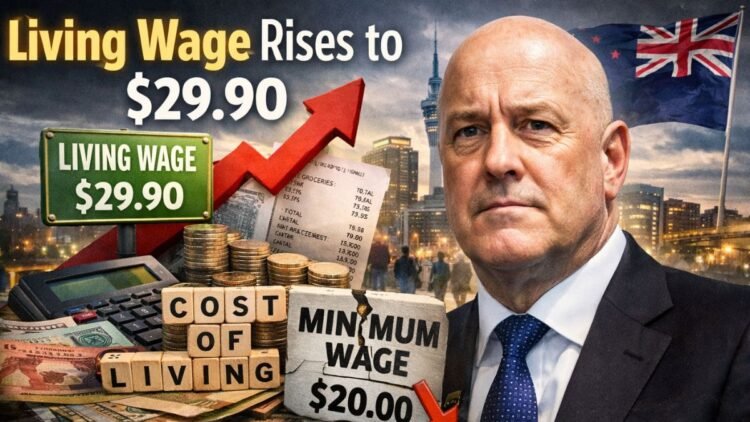
The Living Wage in New Zealand has been raised to $29.90 per hour, highlighting a growing gap between what workers earn and the actual cost of living. The announcement comes as the Government’s minimum wage also increased—but by just 45 cents to $23.95 per hour, a rise that many say does not keep up with inflation or rising household expenses.
Accredited Living Wage Employers across the country now have until 1 September to implement the new rate.
Living Wage vs Minimum Wage: A Widening Gap
The difference between the Living Wage and minimum wage is becoming more pronounced.
- Living Wage (2026): $29.90 per hour
- Minimum Wage (2026): $23.95 per hour
- Increase in Minimum Wage: 2%
With inflation running at around 3.1%, the minimum wage increase effectively represents a decline in real income for low-paid workers.
The Living Wage is calculated to reflect the true cost of essentials, including:
- Rent and housing
- Food and groceries
- Power and utilities
- Transportation
In contrast, critics argue the minimum wage is falling behind these rising costs.
Cost-of-Living Pressures Intensify
The announcement comes at a time when everyday expenses are climbing rapidly. Fuel prices have surged beyond $3.30 per litre nationwide, with some areas of Auckland seeing prices close to $4 per litre amid global tensions.
For many workers, especially those on lower incomes, these increases are having a direct impact on daily life.
Workers Speak Out on Financial Strain
Low-paid workers are increasingly vocal about the challenges they face. Many say that even getting to work has become a financial burden.
Long commutes, rising transport costs, and increasing living expenses are putting pressure on workers who are already earning near minimum wage.
For some, public transport is not always a viable alternative due to time, cost, and accessibility. As a result, the financial strain is affecting not just household budgets but also mental and physical wellbeing.
Calls for More Living Wage Employers
There are currently over 340 accredited Living Wage Employers across Aotearoa New Zealand, spanning both public and private sectors.
Unions such as E tū are calling on more employers to adopt the Living Wage standard, particularly in industries where workers are paid at or near minimum wage.
Advocates argue that:
- Employers who can afford it should adopt the Living Wage
- It provides fair compensation aligned with real expenses
- It supports worker wellbeing and productivity
Criticism of Government Wage Policy
The Government’s decision to increase the minimum wage by only 45 cents has drawn criticism from worker groups.
Critics say:
- The increase does not match inflation
- Workers are effectively losing purchasing power
- Policy changes, such as removing Fair Pay Agreements, have reduced opportunities for wage growth
They argue that a more substantial increase is needed to reflect the economic realities facing workers today.
Why the Living Wage Matters
The Living Wage is designed to ensure that workers can meet basic living standards without financial hardship.
Supporters believe it:
- Promotes economic fairness
- Reduces inequality
- Improves quality of life
For many workers, the difference between minimum wage and Living Wage can determine whether they can cover essential costs comfortably.
Conclusion
The rise of the Living Wage to $29.90 highlights the growing disconnect between wages and the cost of living in New Zealand. While the minimum wage has increased slightly, it continues to lag behind inflation and rising expenses, leaving many workers struggling.
As pressure mounts on both employers and policymakers, the debate over fair wages is likely to intensify. For now, the Living Wage serves as a benchmark for what many believe is necessary to maintain a basic standard of living in today’s economic climate.
FAQs
1. What is the Living Wage in New Zealand for 2026?
The Living Wage has been set at $29.90 per hour.
2. How much is the minimum wage now?
The minimum wage has increased to $23.95 per hour, up by 45 cents.
3. Why is there criticism of the minimum wage increase?
Because it does not keep pace with inflation and rising living costs, reducing real income for workers.